A Japanese knife treated well will outlast almost any other kitchen tool you own. I have knives at work that have been sharpened hundreds of times and still perform beautifully because they've been cared for consistently. I've also seen expensive knives destroyed in months by people who didn't know better.
The maintenance isn't complicated. It's mostly just habits.
Rule One — Never the Dishwasher
I'll say it once, plainly: the dishwasher will ruin your Japanese knife. The high heat causes wooden handles to swell and crack. The harsh detergent strips any protective patina from the steel and accelerates rust. The rattling chips edges. One cycle can do damage that takes hours to sharpen out.
Hand wash only. Every time. No exceptions.
Rule Two — Wash It, Dry It, Now
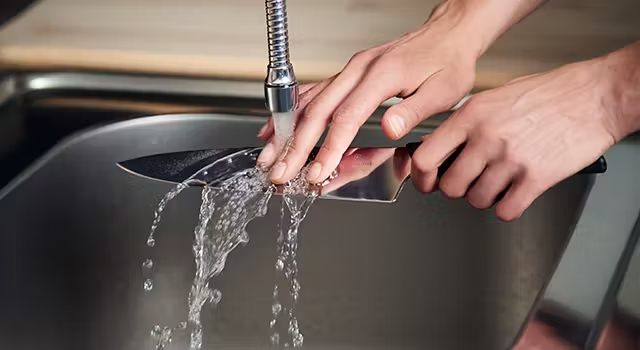
Don't let your knife sit in the sink, sit wet on the counter, or soak in water. Japanese high-carbon steel is reactive — it will rust faster than you expect if left damp. After every use, rinse it under warm water, a drop of mild soap on a soft sponge, rinse again, and dry it completely with a clean towel. Takes fifteen seconds.
Chef's Note
If you're cutting acidic ingredients — tomatoes, citrus, vinegar — wipe the blade during cooking too. Acid attacks the steel quickly and can leave dark spots that are difficult to remove later.
Rule Three — Use the Right Cutting Board
The cutting surface matters more than most people realise. Glass and stone boards are beautiful and completely wrong for Japanese knives — they're harder than the steel and chip edges on contact. Hard bamboo has the same problem despite its reputation as a knife-friendly material.
Use an end-grain wood board — hinoki (Japanese cypress) is traditional and ideal, walnut is excellent, and a good quality soft plastic board works fine too. The surface should have some give to it. You want the board to absorb the impact of the cut, not reflect it back into your edge.
Recommended
Large End-Grain Walnut Cutting Board
Gentle on knife edges, self-healing surface, beautiful in any kitchen. Buy once, keep for life.
View on Amazon →Rule Four — Honing vs Sharpening
This confuses a lot of beginners so let me be clear. Honing realigns the edge — it doesn't remove steel. Sharpening removes steel to create a new edge. They're different tools for different purposes.
A ceramic honing rod, used every week or two with light strokes, keeps the edge aligned between sharpenings. Think of it like maintenance on a car — regular small attention prevents the need for major work.
Sharpening with a whetstone is what you do when honing stops making a difference — typically every three to six months for home cooks. Don't sharpen when you should be honing, and don't hone when you actually need to sharpen.
Recommended — Honing
Ceramic Honing Rod for Japanese Knives
Gentler than steel rods — essential for maintaining Japanese high-carbon steel without damaging the edge.
View on Amazon →Rule Five — Store It Properly
A knife rolling around loose in a drawer is getting its edge dulled every time something touches it. Japanese blades deserve better.
- Wooden saya sheath — how professional Japanese chefs store their knives. Custom-fit, protects the edge perfectly.
- Magnetic wall strip — excellent for home kitchens. Blade hangs freely, nothing touches the edge.
- In-drawer knife block — if wall mounting isn't possible. Keeps blades separated and protected.
When to Get It Sharpened
If your knife tears rather than slices, slides off tomato skin rather than biting through it, or needs noticeably more force to cut soft ingredients — it's time to sharpen. If you're not yet comfortable with a whetstone, a professional sharpening service once or twice a year is completely reasonable.
The important thing is that the knife stays sharp — however you achieve it. 🔪